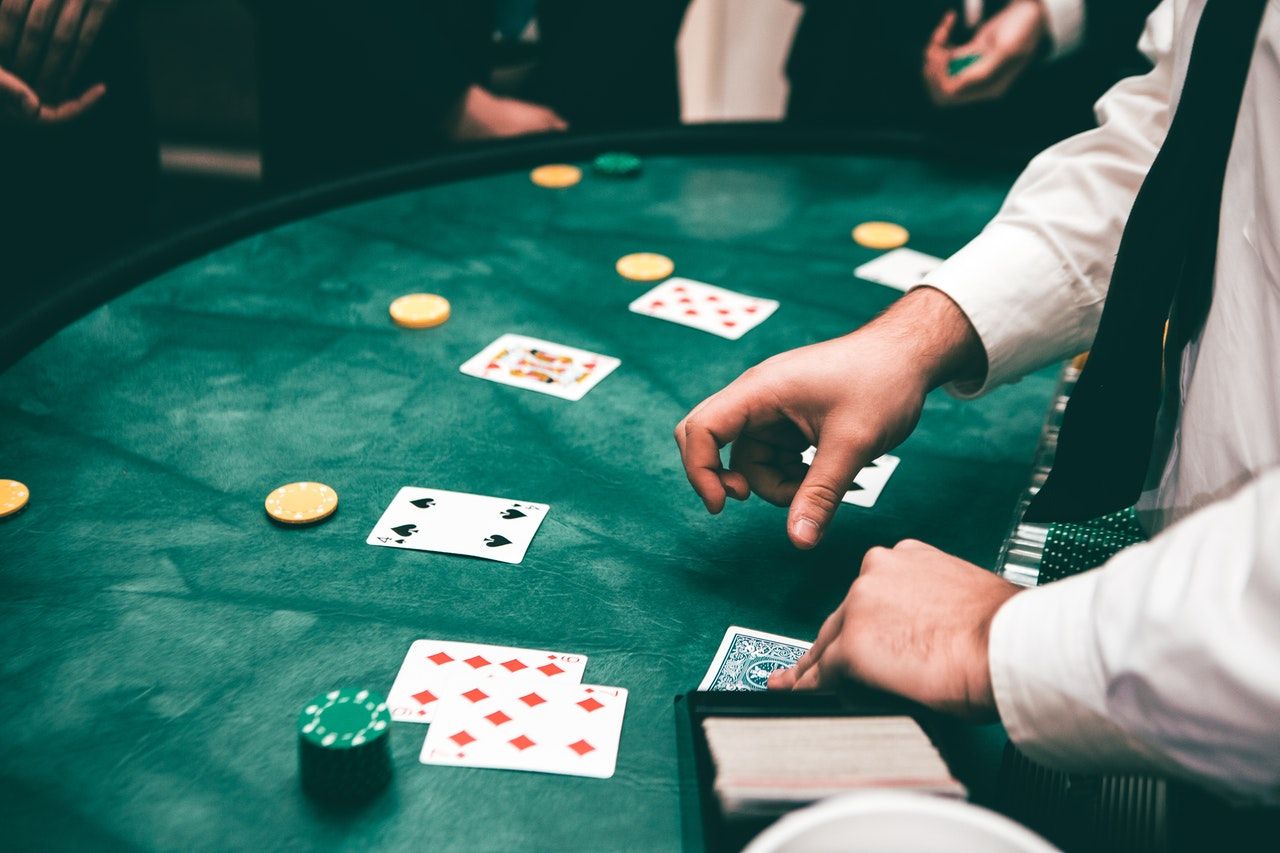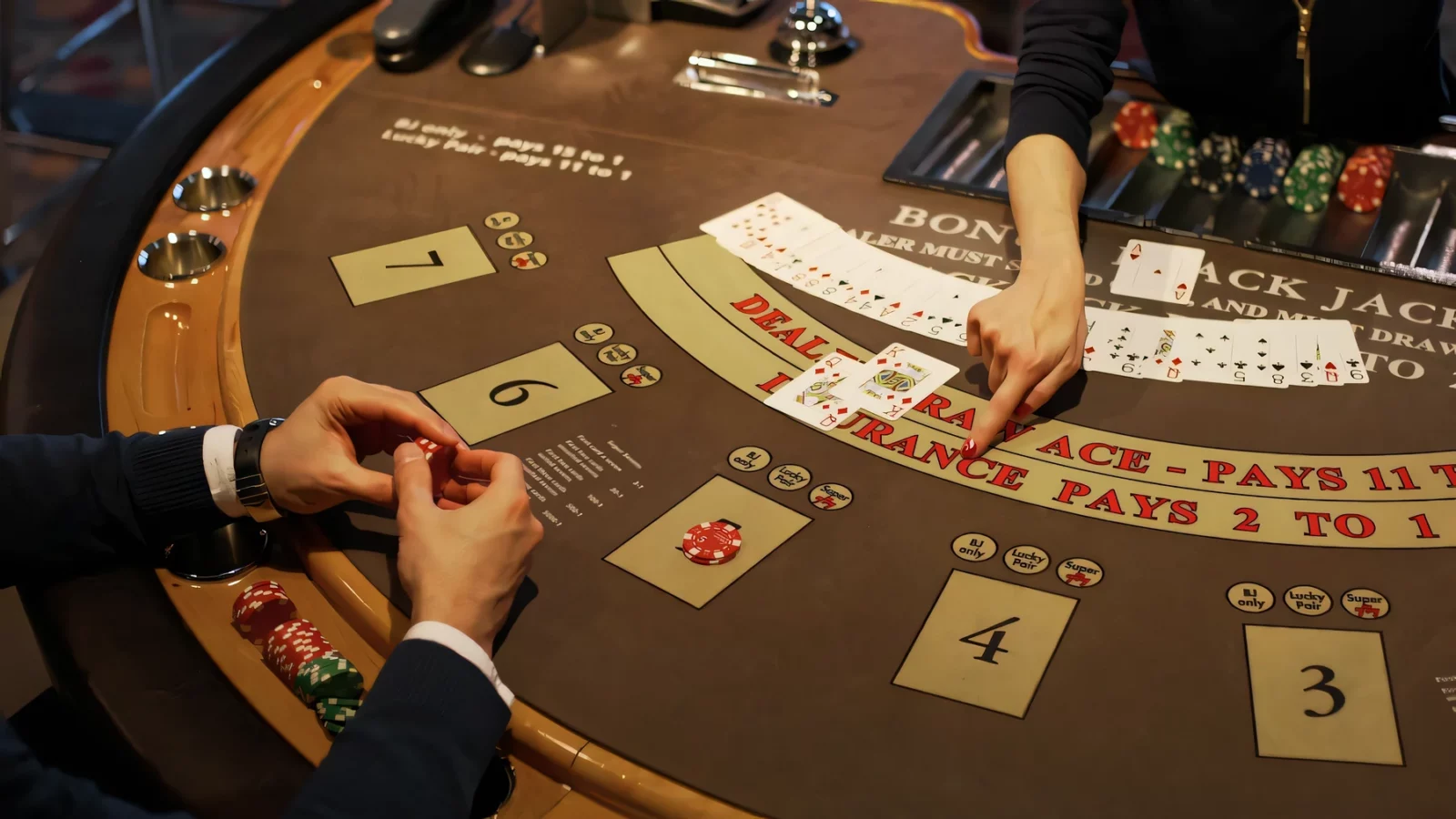
The insurance bet flashes up on screen with an Ace showing, and your stomach tightens. Half your stake back if the dealer flips a ten-value card. This looks like damage control, a way to soften the blow. It is not. In a standard eight-deck game the dealer completes their blackjack roughly 30.7% of the time, yet the 2:1 payout prices the bet as if the chance were 33.3%. That gap is not rounding error. It is a house edge of about 5.9% on a wager that exists entirely outside your main hand, and it will bleed you dry if you treat it as sensible defence.
How the Game Actually Works
Blackjack pits you against the dealer alone. Other players at the table do not matter. The objective is a hand total closer to 21 than the dealer’s, without crossing over.
Card values are fixed and unforgiving. Numbered cards carry their face value. Kings, queens and jacks all count as ten. The ace is the only flexible piece, worth either one or eleven depending on which keeps you alive. A hand containing an ace counted as eleven is “soft” because drawing again cannot bust you immediately. Ace plus six is soft 17. Ace plus six plus five is hard 12, the ace now forced to one.
The deal runs the same across RNG tables and live streams: two cards face-up to each player, one face-up and one face-down to the dealer. You act first. Stand, hit, double down or split. Only then does the dealer expose their hole card and hit until they reach at least 17. If they blow past 21, every remaining player wins. Otherwise, totals are compared. Standard wins pay even money. A natural blackjack, ace plus ten-value card from the opening deal, pays 3:2. A tie returns your stake.
When to Move and When to Freeze
Basic strategy is not intuition or superstition. It is the mathematically optimal action for every hand against every dealer upcard, derived from millions of simulated outcomes. Deviate from it and you are simply donating edge back to the house.
Stand on hard 12 through 16 when the dealer shows 2 through 6. Their fixed rules force them to hit into weak territory, and these low cards make busting more likely. Hit the same totals when the dealer shows 7 through ace. Your hand is not strong enough to win unimproved, and the dealer is not going to self-destruct.
Always split aces and 8s. Two aces give you two shots at 21. Two 8s escape the miserable prison of 16, the worst starting total in the game. Never split 10s. Twenty wins more often than two separate hands ever will. Double down on 10 or 11 when your total exceeds the dealer’s upcard. One strong card is often enough, and you want maximum money in play.
These principles hold whether you are playing standard virtual blackjack games or live dealer tables with a human shoe and real latency. The maths does not care about the interface.
The Insurance Trap Explained
Insurance is offered only when the dealer’s upcard is an ace. You may stake up to half your original bet on a side wager that pays 2:1 if the hole card completes a blackjack. The pitch is psychological protection. The reality is a separate bet with worse odds than most main blackjack wagers.
Consider the arithmetic in an eight-deck shoe. After removing one ace for the dealer’s upcard, 415 cards remain. Of those, 128 are ten-value cards that would complete blackjack. That is 30.7%. The 2:1 payout implies you need a 33.3% chance to break even. The shortfall is permanent and compounding. Over thousands of hands, taking insurance reliably transfers money from your stack to the house.
Some players justify it by protecting a strong hand, a 20 or a blackjack of their own. This confuses two independent events. Your main hand outcome and the insurance outcome do not interact. Winning the side bet does not improve your main hand’s chances, nor does losing it soften the blow of a dealer blackjack. It is simply a bad bet dressed in reassuring language.
Rule Variations That Actually Shift the Edge
Online casinos, including crypto operators serving UK players, tweak rules in ways that matter more than any side bet. Dealer hitting soft 17 instead of standing adds roughly 0.2% to the house edge. Restrictions on doubling after splits or re-splitting aces chip away further. Six-deck games offer marginally better odds than eight-deck games, all else equal. Surrender, where offered, is a genuine strategic tool that basic strategy charts incorporate.
Before sitting at any table, virtual or live, check the help or info panel for these specifics. A playable game and a bad one dressed up as an offer often differ by a single rule line. The same discipline applies across table games generally. Not every variant rewards the same approach, and assuming universal strategy is an expensive habit.
Building Strategy That Travels
Solid blackjack strategy is portable. The fundamentals do not change when you switch from a £5 RNG table to a £25 live stream with Ethereum deposits. Card values remain identical. Dealer fixed rules remain identical. Your decisions remain identical. What changes are the conditions around the edges: withdrawal speeds, bonus wagering requirements that often exclude blackjack entirely or weight it at 10%, and the quality of live stream latency that might affect your timing.
UK players face a specific landscape. Licensed operators must display game rules and theoretical return percentages. Crypto casinos may offer provably fair algorithms, but the underlying blackjack mathematics are unchanged. The edge you fight is still built into payout structures and rule sets, not hidden in the shuffling code.
Treat insurance as the warning it is. Any bet framed as protection rather than profit should trigger immediate scrutiny. The house does not offer side wagers to help you manage risk. It offers them because the maths is favourable to the house. Decline every time, apply basic strategy without improvisation, and choose tables by their rules rather than their branding. That is the difference between playing and donating.